A buyer developing a French minimalist jewelry brand contacted us to find suitable 316L stainless steel fine chains for men's and women's bracelets, bangles and necklaces.
The buyer was not only interested in conventional gold or black. The request was to produce the following colours on fine chains measuring approximately 1.5–2.5 mm, mainly 2.0 mm:
At the same time, the surface could not be excessively glossy or strongly metallic. The buyer wanted a uniform matte or satin finish with very low reflection and was particularly concerned about whether colouring would affect free movement between the links.
This may look like a colour-selection question, but it actually involves chain construction, surface preparation, the available PVD colour range, production scale and link movement.
The buyer needed more than a colour
The buyer was mainly considering Snake, Box, Herringbone and other fine chains suitable for a minimalist collection.
For these products, colour cannot be evaluated separately from chain construction. Even at the same width, different chain structures can produce very different surface results.
- Box chains are made from connected individual links, which must remain movable after colouring.
- Herringbone chains have a flatter surface and are more sensitive to colour uniformity and surface reflection.
- Snake chains have a compact construction, and different profiles and weaving methods respond differently to matte preparation.
- Some round Snake chains are difficult to finish with a uniform matte appearance.
For that reason, suitability for a particular colour and surface cannot be judged from “2.0 mm chain” alone. The actual chain construction matters as well.
Can a 2.0 mm fine chain receive PVD treatment?
Yes.
Chain size itself is usually not the main limitation for PVD treatment. When PVD is applied correctly, its effect on the movement of an approximately 2.0 mm fine chain is usually small.
The points that actually require attention are:
- whether the links can remain properly separated during treatment;
- whether the surface is fully cleaned and prepared;
- whether closely contacting areas can receive even coverage;
- whether the links still move freely after treatment; and
- whether colour and gloss remain consistent across different areas.
Therefore, “can it receive PVD treatment?” and “can it consistently achieve the intended result?” are two different questions.
A matte finish is not created by PVD alone
The buyer wanted a low-reflection matte or satin finish rather than a glossy metallic appearance.
This effect is mainly determined by the base surface before PVD.
For matte black, for example, the stainless steel surface must first be prepared with the required matte or satin texture. Black PVD is then applied. PVD provides the main colour and coating performance, but it cannot automatically turn a polished surface into a uniform matte surface.
The underlying surface determines texture and reflection; PVD determines the main colour and coating performance.
This is why the same black PVD can look very different on polished and matte base surfaces.
What is the difference between standard and custom PVD colours?
Common PVD colours used in jewelry production currently include:
- different gold tones;
- rose gold;
- black;
- blue; and
- rainbow or iridescent effects.
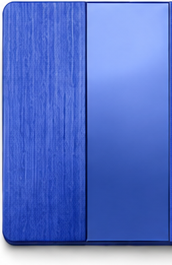
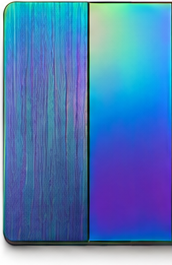
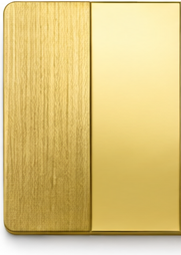
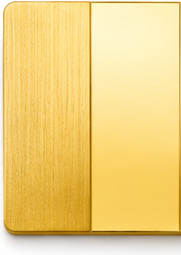
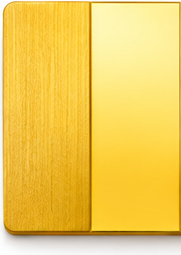
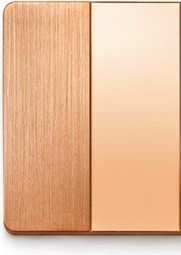
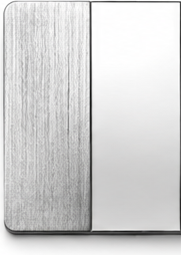
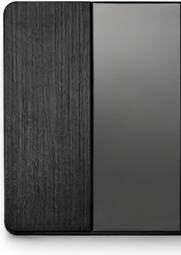
Screen colours are references only. Final approval should be based on a physical coated sample with the specified surface finish.
These colours have relatively mature production conditions, making colour consistency, production cost and delivery stability easier to control.
However, the requested dark navy blue, olive green, khaki green, bright red and bright yellow are not all standard jewelry PVD colours at our cooperating plating factory.
Two questions must be separated:
- Can a certain colour be produced technically?
- Is that colour a standard process suitable for jewelry mass production?
PVD technology itself can produce a wider colour range than the standard jewelry palette. Different depths of blue, green and other special tones can also be seen on phone cases, hardware and other industrial products.
But the technical ability to produce a colour does not mean that it can be made under the normal conditions of a standard jewelry order.
Why do special colours need separate evaluation?
Special PVD colours usually involve:
- separate colour parameter adjustment;
- new equipment settings;
- a dedicated furnace run;
- a physical colour sample;
- checking colour differences between batches; and
- confirming actual performance on small articulated chains.
A PVD furnace run has fixed equipment and production costs. If a colour is not part of the plating factory's routine production, the quantity must be large enough to distribute the colour-tuning and equipment-setup costs.
Therefore, the limitation on a special colour is sometimes not that it is technically impossible, but that:
- there are no established production parameters;
- dedicated colour development is required;
- a separate furnace run is expensive;
- small-scale production cannot achieve a reasonable unit cost; and
- colour stability must be confirmed with a physical sample.
Dark navy blue may require custom PVD to achieve a deeper blue tone, but standard blue PVD cannot simply be presented as an exact navy match.
Green and khaki may also require a dedicated PVD colour system or another colouring route. The final result cannot be promised from a digital colour chart alone.
Why was electrophoretic colouring not recommended directly?
Bright red, bright yellow, green and similar colours can be produced through certain painting or electrophoretic colouring methods.
However, colour range is not the only criterion for an approximately 2.0 mm articulated fine chain. It is also necessary to consider whether coating builds up at the link connections and whether long-term use may cause peeling, wear or tighter movement.
Based on our production experience, this colouring route may present two main issues:
- colour fastness and long-term wear performance are not suitable for every jewelry-use scenario; and
- the coating may affect movement between fine links.
For this reason, we did not recommend this route simply to match the requested colours.
The ability to produce a colour does not automatically make it the right production process for the product.
Can a RAL or Pantone code be converted directly into a PVD colour?
RAL and Pantone codes can be used as communication references, but a code alone cannot guarantee an identical PVD result.
The final PVD colour is also affected by:
- the original stainless steel surface;
- matte or polished preparation;
- the PVD coating system;
- process parameters;
- product shape;
- viewing angle and light; and
- process variation between batches.
For special colours, a physical sample is therefore usually more reliable than a screen image or colour code.
If a buyer has a very specific colour requirement, the colour should be approved using a physical reference on the actual material and surface finish rather than from a digital colour chart alone.
Will PVD make a fine chain stiff?
PVD coating itself is thin. For a suitable chain construction and a correctly controlled process, the effect of PVD on chain flexibility and link movement can usually be ignored.
However, this does not mean that every colouring method leaves movement unaffected.
A thicker painting system, or coating build-up where links contact each other, may make a chain feel tighter. This is particularly important for tightly constructed Snake, Box and other articulated fine chains.
When evaluating a colouring route for a fine chain, the checks should cover more than colour:
- whether the chain bends naturally;
- whether links stick or catch;
- whether there is visible coating build-up at contact points;
- whether colour coverage is even; and
- whether the surface changes abnormally after bending.
How we handle PVD production
Laser work, welding, polishing, assembly, quality inspection and packing are completed by Jinming's factory. PVD processing is completed by a long-term cooperating professional plating factory.
For a special colour or surface requirement, Jinming is responsible for:
- confirming product construction and dimensions;
- defining the required base-surface finish;
- checking colour and process feasibility with the cooperating plating factory;
- inspecting the appearance and movement of products after PVD; and
- confirming whether the product meets the agreed colour and surface requirements.
Stating process ownership accurately helps buyers assess project risk more effectively than describing every process as in-house.
What should buyers confirm before customising a fine-chain colour?
- The exact chain construction and width.
- Whether the required surface is polished, matte or satin.
- Whether the colour is standard or custom.
- Whether a physical colour reference is available.
- Whether free link movement is a critical requirement.
- Whether the buyer accepts physical-sample approval for colour.
- Whether the special colour has a practical production scale.
- Whether the finished product requires corrosion, wear or other performance verification.
Only by evaluating these conditions together can a manufacturer determine whether a colour is genuinely suitable for the product.
Technical conclusion
Approximately 2.0 mm 316L stainless steel fine chains can receive PVD treatment, and chain size itself is usually not the main limitation.
Project feasibility is determined by chain construction, the base surface, target colour, coating system, movement requirements and production scale.
Standard PVD colours usually provide a more practical balance of appearance, durability, cost and production stability. Special colours may be technically possible, but they require separate evaluation and cannot be treated as a simple colour-chart selection.
For articulated fine chains, the correct question is not only “can this colour be produced?” It is:
Can the target colour be achieved while maintaining an even surface, free link movement and stability suitable for actual wear?