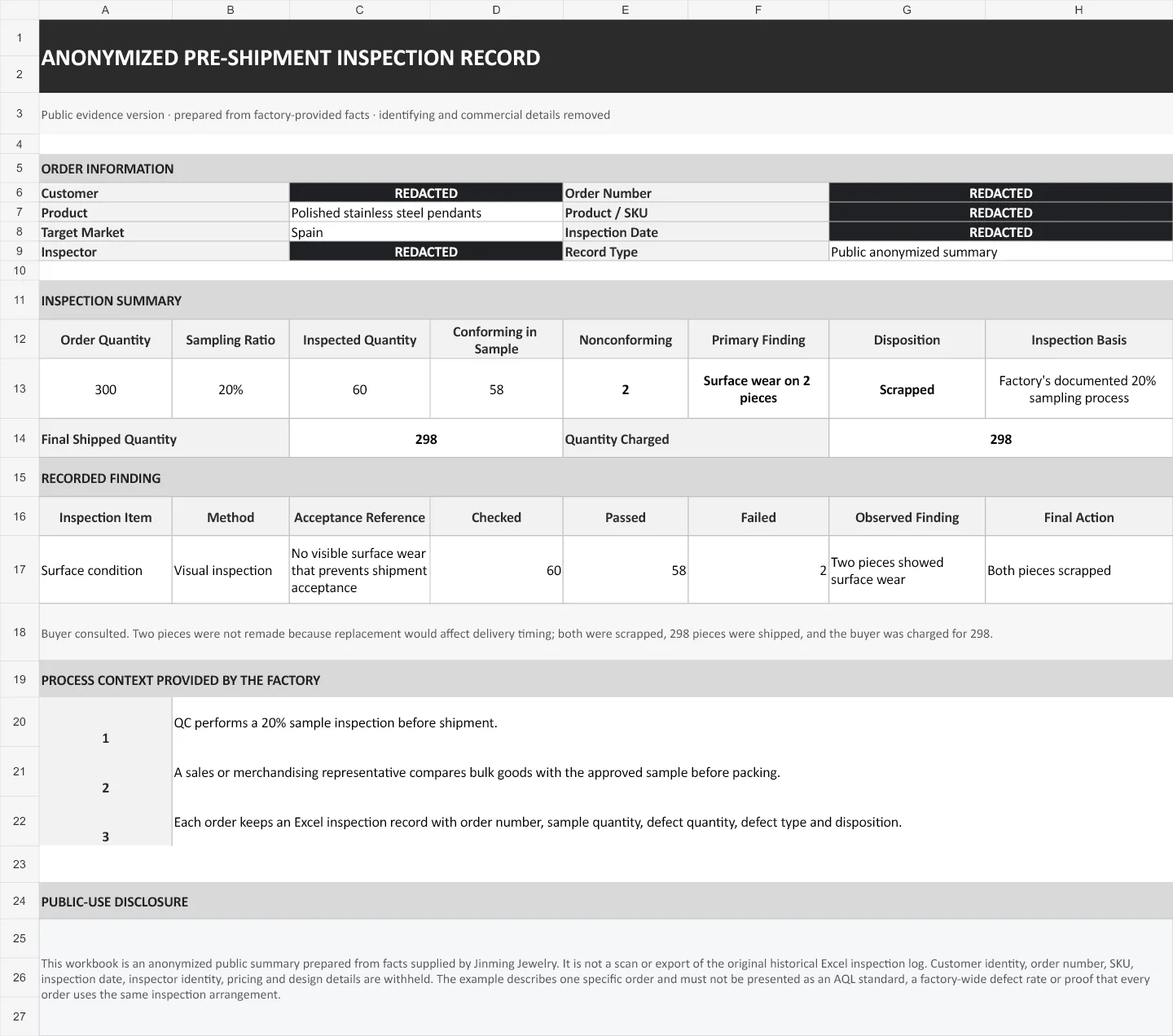
If bulk jewelry fails inspection, the affected pieces should be separated, the defect should be documented, and the factory should decide whether to rework, scrap or seek the buyer's written acceptance. Shipment should proceed only after the disposition is clear. In one Jinming order planned for 300 pieces, 60 pieces were checked, two pieces with surface wear were scrapped, 298 pieces were shipped, and the buyer was charged for 298.
What should happen immediately after a defect is found?
The first step is containment: identify the affected units and prevent them from entering packing. Jinming's trigger conditions for rework include serious color difference, loose stones and weak welding. Surface wear, scratches, pits, missed plating, visible glue, crooked stones and burrs are also checked during appearance inspection.
The order merchandiser can request a production stop or rework. Photos and written notes are used to explain the issue to the buyer when a decision affects the order. Items that can be reworked are sent for rework and checked again; items that cannot be reworked are discarded or scrapped. A buyer may accept a documented cosmetic deviation, but material, regulatory or safety nonconformity should not be waived through an informal message.
What happened in the 300-piece inspection example?
- Planned quantity: 300 polished stainless steel pendants
- Destination market: Spain
- Inspected quantity: 60 pieces, equal to the factory's documented 20% check
- Defects found: two pieces with surface wear
- Disposition: buyer consulted; two affected pieces scrapped
- Final shipment and billing: 298 pieces
The two pieces were not remade because producing only two replacements would have affected delivery timing. The factory asked the buyer, removed the defective units, and invoiced only the 298 pieces shipped. This is a disposition example—not evidence that the entire lot failed an AQL inspection. Jinming's recorded procedure for this order was a 20% factory sampling check, followed by a salesperson's comparison of bulk goods with the approved sample.
What evidence should the buyer receive?
A useful record identifies the order, inspected quantity, defect quantity, defect type and final handling result. Jinming keeps a pre-shipment Excel inspection record for each order and retains a bulk sample. Production date, processing batch, plating batch and inspection personnel can also be traced internally. Bulk photos or video can be sent before shipment.
When should the factory rework, scrap or ask for acceptance?
- Rework: when the issue can be corrected without introducing a new defect and the corrected pieces can be checked again.
- Scrap: when correction cannot meet the agreed result or is not practical within the delivery decision.
- Buyer acceptance: when the deviation is cosmetic, clearly documented and commercially acceptable to the buyer.
Buyers should ask the supplier to record both the planned quantity and the final shipped quantity. That prevents a rejected or scrapped piece from being charged as a conforming product.
Confirmed defect handling
What happens to pieces with scratches, loose stones or color differences?
Affected pieces are separated and not included in the shipment. Depending on the issue, they are reworked, recycled or scrapped. If the buyer requires the full ordered quantity, Jinming arranges the replacement quantity as quickly as practical and checks it again before shipment.
Frequently asked questions
Does one defective sample mean the entire jewelry order has failed?
No. It shows that a defect was found in the inspected quantity. The lot decision depends on the agreed sampling plan, defect classification and acceptance rule.
Who can stop production or request rework at Jinming?
The order merchandiser can request a production stop or rework and coordinates the issue with the production supervisor.
Will a buyer be charged for scrapped pieces?
In the documented 300-piece example, two affected pieces were scrapped, 298 were shipped, and the buyer was charged for 298.
Can a buyer approve a failed safety or material requirement?
A cosmetic deviation may be documented and accepted, but material, regulatory or safety nonconformity should not be cleared by informal buyer acceptance.